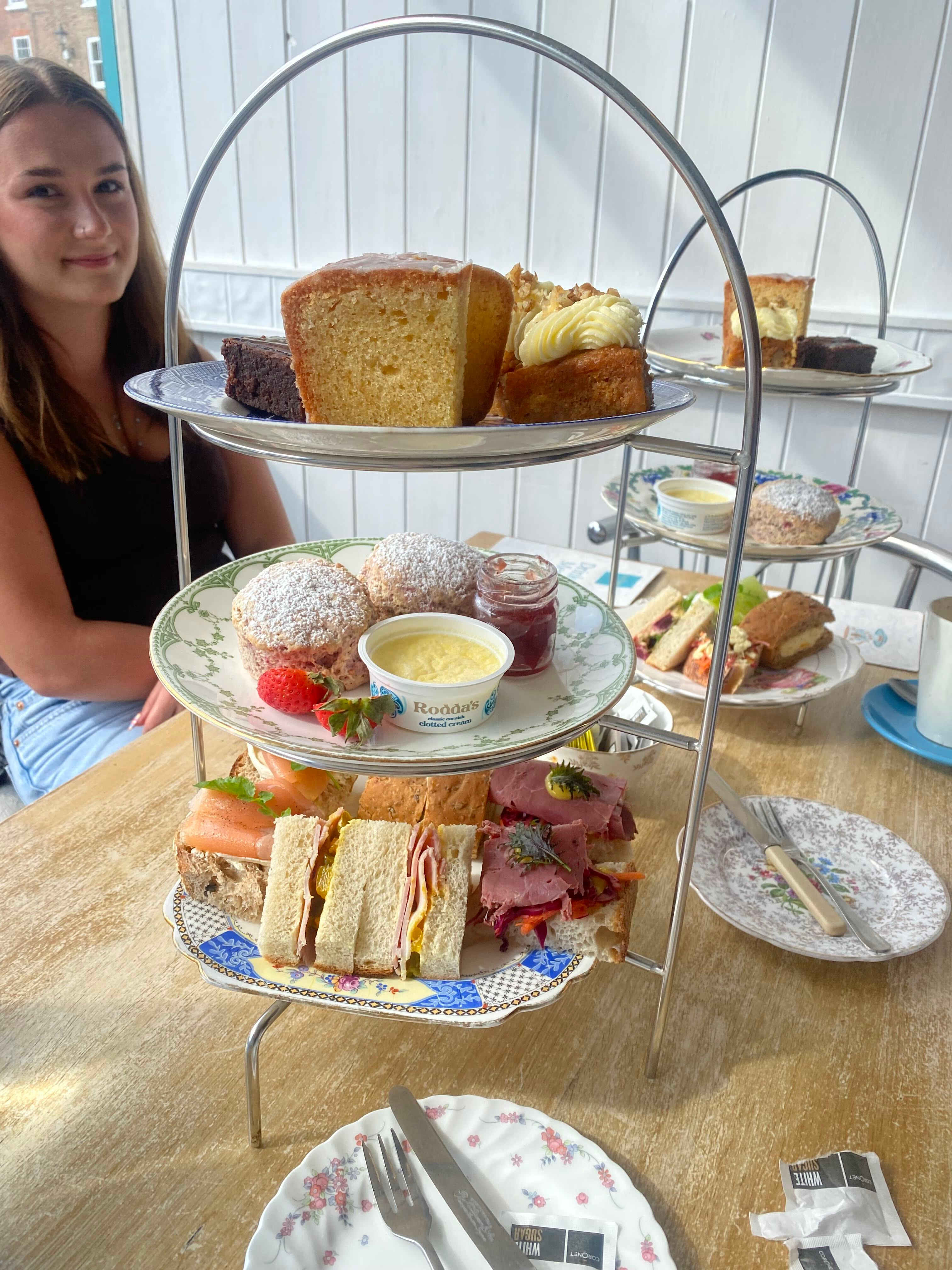
Afternoon tea
Afternoon tea in Thirsk before Christmas
Afternoon tea on Thirsk market square through November and December: booking a time online, the Christmas Eve change, bigger groups, and a voucher as a present.
18 October 20263 min read
Afternoon tea · The basics
People book it, get given it as a present, and turn up not quite sure what is coming or how it works. Here is the plain version: what it is, how it differs from a cream tea and from high tea, when it is eaten, and the bits of etiquette worth knowing.
Afternoon tea is a light meal served in the middle of the afternoon: finger sandwiches, then scones with jam and clotted cream, then small cakes, with a pot of tea alongside. It usually takes about an hour. It is not the same as a cream tea, which is scones only, and it is not high tea, which is an evening meal with hot food.
Told apart
Three names, three different meals. The one that catches people out is high tea, because it sounds grander and is actually plainer.
| Which | What is on it | When | At Tea Time |
|---|---|---|---|
| Cream tea | A scone, clotted cream, jam and a pot of tea. Nothing else. | Any time the kitchen is open | On the everyday menu at 8.9, sweet or savoury, no booking needed |
| Afternoon tea | Finger sandwiches first, then a scone with jam and cream, then cakes, with tea alongside. | Traditionally mid to late afternoon | 24.9 per person, booked any half hour from 12 to 3, or 12 to 2 on Sundays |
| High tea | A cooked evening meal: hot savoury dishes, bread and butter, strong tea. Not a grander afternoon tea. | Late afternoon into early evening | Not something we serve. The closest thing here is lunch |
High tea got its name from the table, not the class of the food. Working households ate it at the high dining table at the end of the day, while afternoon tea was taken sitting in low chairs. Hotels overseas borrowed the phrase for their smartest version and the meaning drifted.
Where it came from
The custom is usually credited to Anna Maria Russell, the seventh Duchess of Bedford, in the 1840s. Dinner in her circle had drifted towards eight or nine in the evening, which left a long empty stretch after lunch. She started taking tea with bread and butter and a bit of cake in the middle of the afternoon.
Then she began inviting other people to join her, and the private habit became a social one. By the end of the century it had spread well beyond aristocratic drawing rooms and into tea rooms, department stores and ordinary houses.
The shape has barely changed since: something savoury, something with cream on it, something sweet, and enough time to sit.
Timing
The traditional window is roughly three to five in the afternoon, set by the gap between a light lunch and a late dinner. Most tea rooms now start earlier, because most people do not eat dinner at nine.
We take bookings any half hour from 12 to 3, or 12 to 2 on Sundays. Twelve works well if you want the afternoon afterwards; the last time of the day, three or two on a Sunday, lands closer to the traditional hour and rolls into the end of the day.
Length
Sixty to ninety minutes is the comfortable shape, and most tables are done inside that. There is no time limit: the pot gets refilled, and conversation slows the whole thing down if you let it.
If you are fitting it around a train or a booking elsewhere, say so when you arrive.
The old argument
This one is real, and it is regional. In Devon the clotted cream goes on the scone first, thick like butter, with jam spooned on top. In Cornwall the jam goes on first and the cream sits on it. Both counties will tell you the other is doing it wrong, and both have been at it long enough that neither is going to stop.
There is a practical case for each. Cream first spreads more evenly on a warm scone. Jam first stops the cream sliding and looks better on the plate. Neither changes the taste much once it is in your mouth.
We are in Yorkshire, several hundred miles from the fight. Both pots come to the table separately and you build it however you like.
A sweet scone baked that morning, Fruity Kitchen strawberry jam and clotted cream. Served with the pots on the side.
Etiquette
Most afternoon tea etiquette is invented, and the invented parts are the ones people worry about. These six have a reason behind them. Ignore any of them in our cafe and nothing at all will happen.
Sandwiches first, then the scone, then the cakes. Savoury before sweet, so the sugar does not flatten everything after it.
Split it in half by hand across the middle. A knife compresses a warm scone and you lose the crumb. The knife is for the jam and the cream.
Load one half, eat it, then do the other. A scone assembled early goes soggy while you talk.
The convention is a soft movement rather than a swirl, and no clinking round the sides of the cup. It is quieter, which is the actual reason.
Sticking it out is a cartoon of politeness, not a rule from anywhere. Hold the handle, keep the hand relaxed.
The old habit of pouring milk first came from protecting thin porcelain from hot tea. Modern cups do not care, and neither do we.
Questions people ask
Ours is 24.9 a head for a minimum of 2, served on vintage crockery at 87 Market Place in Thirsk, booked any half hour from 12 to 3, or 12 to 2 on Sundays.
Eating with an allergy or a dietary requirement? Start with the dietary page. Marking an occasion? See celebrations.
From the journal
Afternoon tea
Afternoon tea on Thirsk market square through November and December: booking a time online, the Christmas Eve change, bigger groups, and a voucher as a present.
Afternoon tea
What is actually on the stand, how booking a time works, what we can swap for allergies, and the honest answer on how much food it is.