Plan a day in Thirsk · Short drive · History & heritage
Byland Abbey
The free ruin of one of Britain's largest Cistercian abbeys, with the rose window that inspired York Minster
- From the cafe
- 20 min drive
- Time to allow
- 45 minutes
- Cost
- Free
Opening, prices & access
- From Tea Time Cafe
- 20 min drive. Needs a car; about 10 miles east near Coxwold, two miles south of the A170, roughly a 20-minute drive
- Time to allow
- About 45 minutes; 30 minutes if you're rushing
- Cost
- Free
- Opening
- The ruins are open every day during reasonable daylight hours. The volunteer-run museum and bookshop open Friday to Monday, 12pm to 4pm, from April to the end of October, with an abbey tour at 2pm on Saturdays and Sundays; in winter they open at weekends only, 11am to 1pm, weather and volunteers permitting
- Dogs
- Welcome
- Access
- Grassy and uneven underfoot across the whole site, with a disabled set-down point at the gate. There is no visitor centre; the nearest toilets are at the Abbey Inn opposite, which is worth asking about first.
Why go
Byland is the quietest of Yorkshire's great monastic ruins, and for a lot of visitors that makes it the best. The Cistercian community settled here in 1177 and built on a scale meant to rival Rievaulx and Fountains, which at its height made this one of the largest Cistercian abbeys in Britain. What survives is the west front, still carrying the lower half of an enormous rose window. That window is the one credited with inspiring the rose window at York Minster.
The other reason to come is the price. English Heritage keeps the ruins open every day in daylight hours and charges nothing, so on a weekday outside the summer you can have several acres of medieval abbey to yourself with sheep for company. No ticketed site can sell you that.
Getting there
From Tea Time Cafe at 87 Market Place, take the A170 east out of Thirsk and up Sutton Bank, then follow the signs for Coxwold and Byland. The abbey sits about two miles south of the main road, roughly ten miles and twenty minutes from the square. The last stretch is single-track lane in places, so allow a little longer behind a tractor.
Public transport is limited to summer weekends. The seasonal Moorsbus M5 links Thirsk with Coxwold, Byland, Ampleforth and Helmsley, and its 2026 season ran on Saturdays, Sundays and bank holidays from 3 April to 27 September. Outside those months and days you will need a car; check moorsbus.org for the next season's dates. The car park by the ruins is a small triangle holding about nine vehicles, with more space behind the Abbey Inn across the road, and there is a set-down point at the gate for anyone who cannot walk far.
What to do
Walk to the west front first and look up at the base of the rose window, which was conserved in 2017 and gives the site its best-known profile. Then pace out the footprint of the church, because the scale only registers once you have walked it.
Find the floor tiles next. Byland keeps large panels of decorated 13th-century tiles, still holding their green and yellow glaze, laid where the monks would have walked. They are covered over in winter, so a spring or autumn visit is the one to plan. After that, the volunteer-made labyrinth, and the small museum and bookshop if it happens to be open. Bring a picnic and eat it on the grass, though never on the tiles.
Best features
The rose window and its link to York Minster. The tiles, which are 13th-century work laid out in the open where you walk rather than shut behind glass. The emptiness, which turns a half-hour stop into something more contemplative than a ticketed abbey usually manages. And the Abbey Inn directly opposite, which makes lunch straightforward once you are done.
Tips
Come between spring and autumn if the tiles matter to you, and aim for a Friday to Monday if you want the museum and bookshop open, since both depend on volunteers and can close at short notice. The site is exposed and the grass holds damp, so proper shoes and a windproof layer make sense even in August. Photographers should come late in the day, when low sun through the rose window arch is the shot everyone else has missed. Combine it with Sutton Bank on the way out or back for a full day east of Thirsk, and leave the picnic in the car until you have found a dry patch.
Questions people ask
Byland Abbey, answered
How much does Byland Abbey cost?
Nothing. Entry to the ruins is free every day, which is unusual for a site of this scale and one of the reasons we recommend it so often.
Are the medieval floor tiles always on show?
No. The 13th-century tiles are covered over through the winter to protect them, so spring to autumn is the time to come if you want to see them.
Is there a cafe or toilet on site?
There is no visitor centre and no cafe. The toilets are at the Abbey Inn across the road, so ask there rather than arriving with an urgent need.
Can I get there without a car?
Only in the Moorsbus season. The seasonal M5 serves Byland, and in 2026 it ran on Saturdays, Sundays and bank holidays from 3 April to 27 September. Outside the season it is a car trip.
What is the parking like?
Small. The triangular car park by the abbey holds around nine cars, with extra space behind the Abbey Inn opposite, so arriving early on a fine weekend pays off.
Are dogs allowed?
Yes, on short leads in the grounds. The site is open grass and ruins with no livestock, so it makes an easy stop on a day out with a dog.
Goes well with
Make a day of it
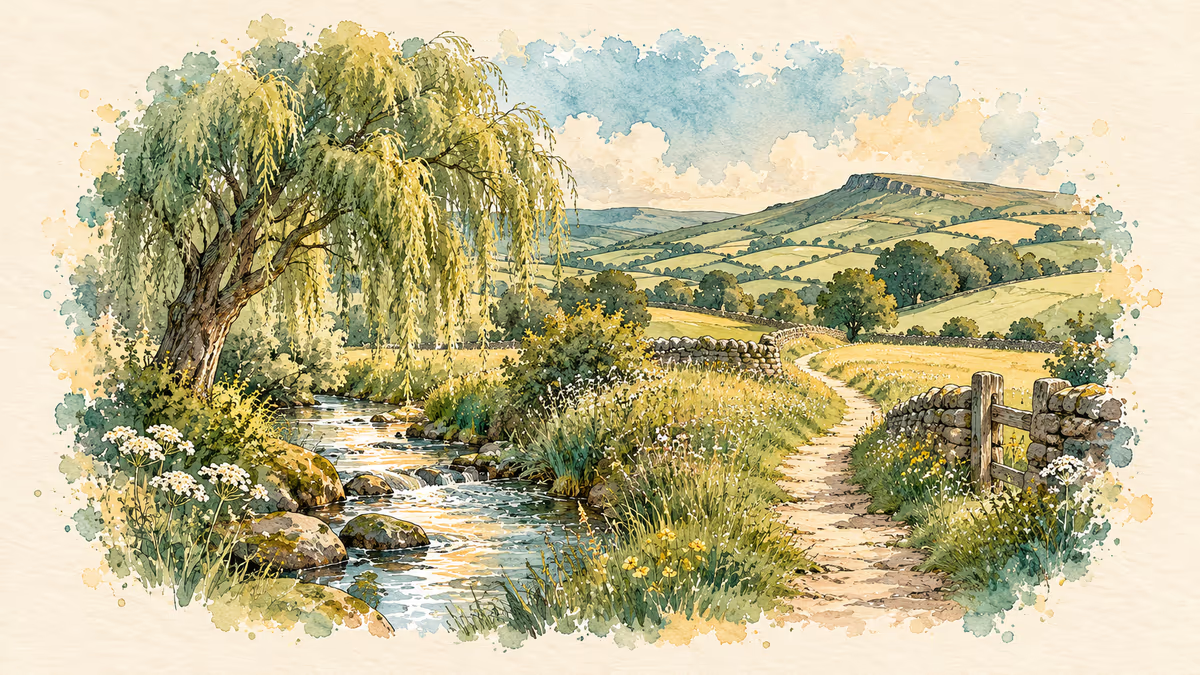 Countryside illustration
Sutton Bank and the White Horse
The escarpment James Herriot called the finest view in England, with the Kilburn White Horse a mile and a half along the edge
15 min drive from the cafe
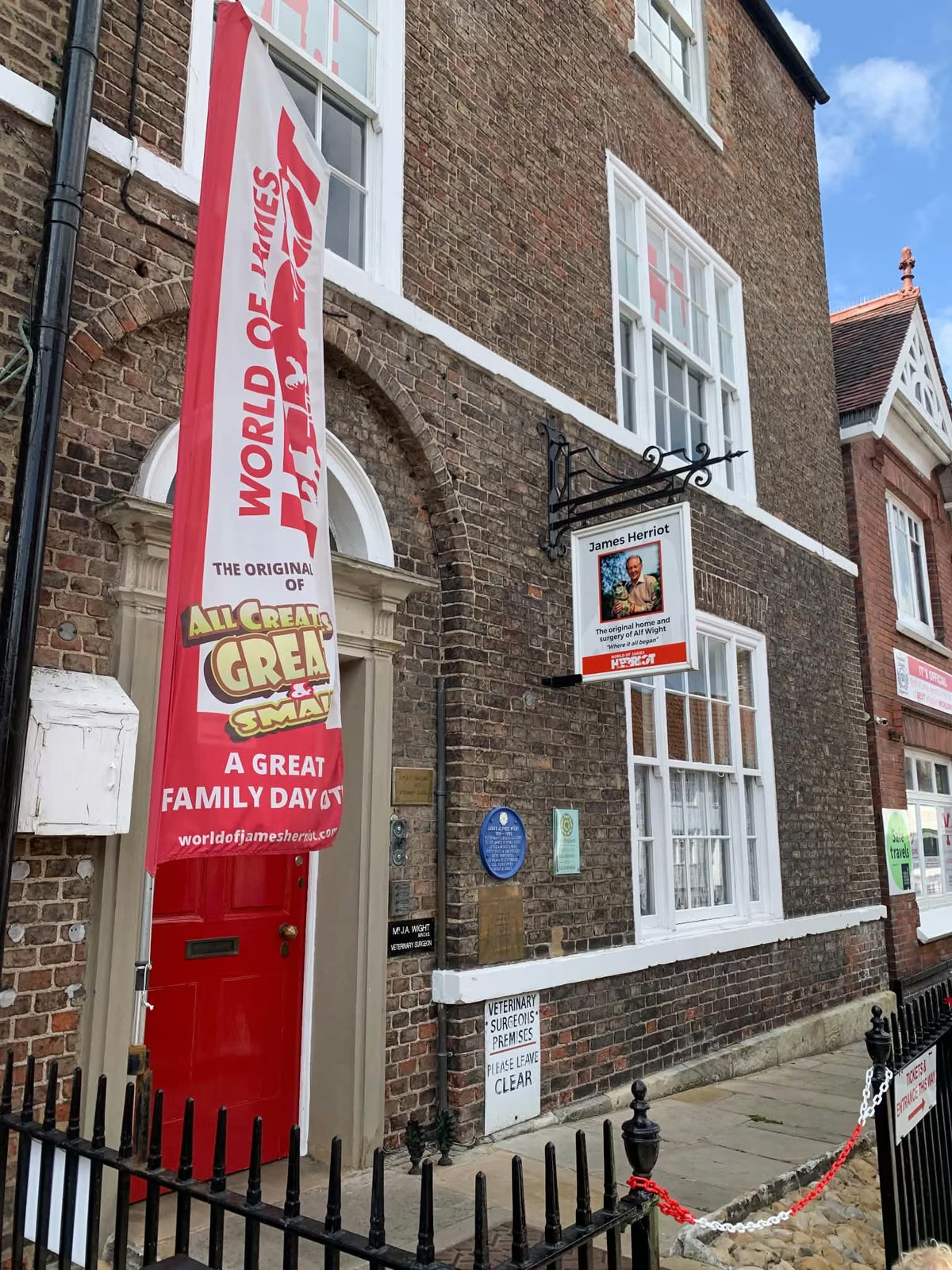
World of James Herriot
The house at 23 Kirkgate where Alf Wight lived and practised, kept as the Skeldale House of the books
4 min walk from the cafe
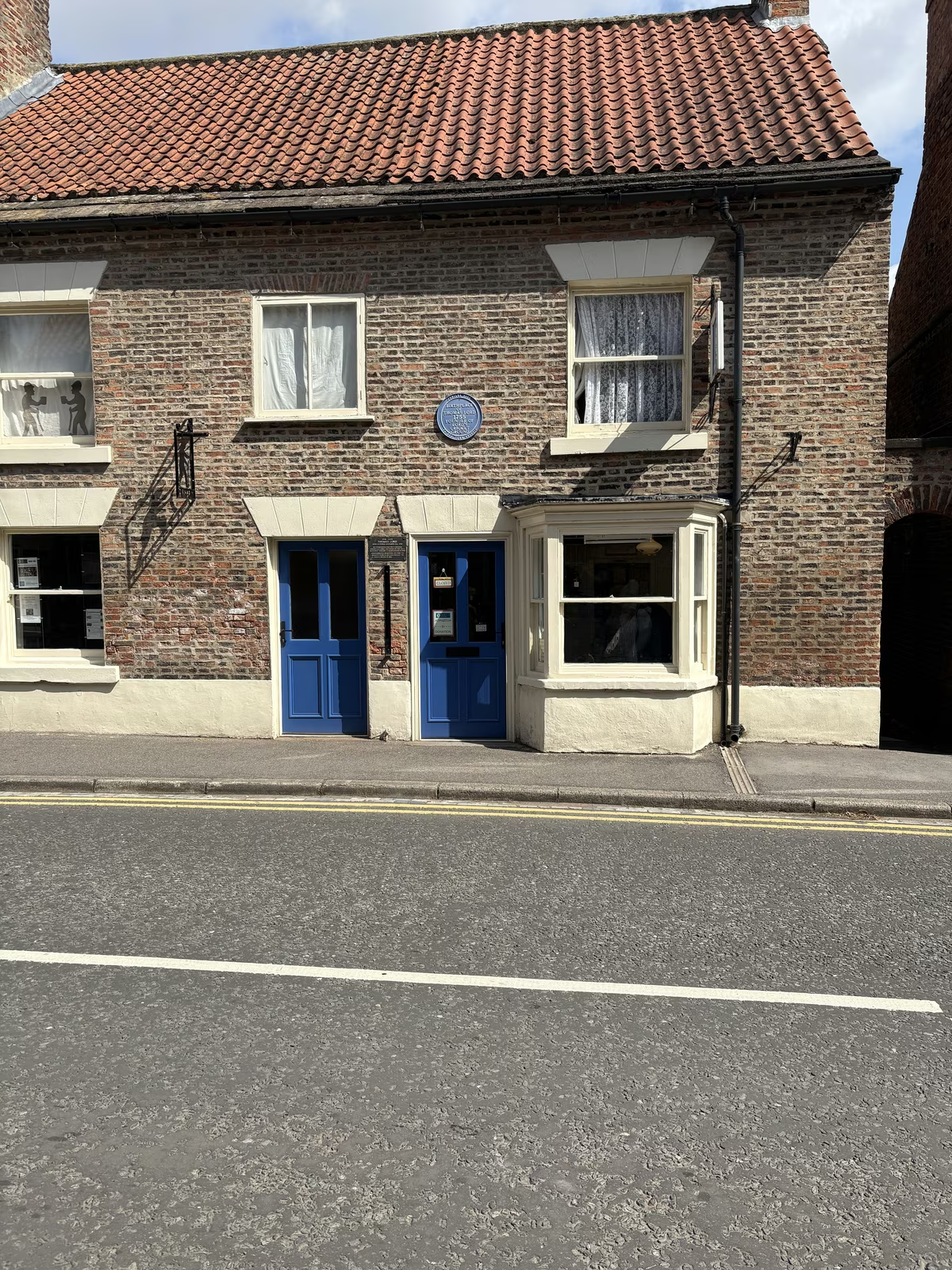
Thirsk Museum
Free volunteer-run museum in the house where Thomas Lord, founder of Lord's Cricket Ground, was born in 1755
3 min walk from the cafe
Start or finish at Tea Time Cafe, 87 Market Place. Hours and directions. Spotted something out of date? Tell us and we'll fix it.