Plan a day in Thirsk · Short drive · History & heritage
Mount Grace Priory, House and Gardens
The best-preserved Carthusian charterhouse in England, twenty minutes up the A19, with a reconstructed monk's cell, an Arts and Crafts house and a well-known family of stoats
- From the cafe
- 22 min drive
- Time to allow
- 1.8 hours
- Cost
- Adults pay 10.79 to 13.85 depending on the day when booked online by midnight the day before, against 12.70 to 16.30 on the day itself; in October 2026 that meant 10.79 online on weekdays and 12.32 at weekends.
Opening, prices & access
- From Tea Time Cafe
- 22 min drive. About 20 to 25 minutes by car north on the A168 and A19, with the turning signposted from the southbound carriageway only; needs a car
- Time to allow
- About 1.8 hours; 60 minutes if you're rushing
- Cost
- Adults pay 10.79 to 13.85 depending on the day when booked online by midnight the day before, against 12.70 to 16.30 on the day itself; in October 2026 that meant 10.79 online on weekdays and 12.32 at weekends. Children 5 to 17 pay 5.35 to 6.88 online and concessions 10.03 to 13.09. These are the prices without the optional donation. English Heritage members free. National Trust members free too, using code G03ANZ at the online checkout with the card shown on arrival, except on event days, and may be asked to pay for parking
- Opening
- Open daily 10am to 5pm from 28 March to 24 October, then daily 10am to 4pm from 25 October to 1 November, then weekends from November, 10am to 4pm, with extra days over Christmas and the February half term, and Wednesday to Sunday from mid-February to mid-March. Closed 24 to 26 December
- Dogs
- Welcome
- Access
- Ramp access into the house and the priory grounds, an accessible toilet, an induction loop and one mobility parking space bookable through English Heritage. Pushchairs and baby back-carriers are welcome. The ruins and the terraced gardens involve grass and uneven ground in places
Why go
Mount Grace is the nearest of the big days out to Thirsk and the one most locals have driven past for years without stopping. Founded in 1398 as the House of Mount Grace of Ingleby, it is the best-preserved Carthusian charterhouse in England. The Carthusians were hermits who happened to live in a group. Each monk had his own cell and his own walled garden and spent most of his life inside them. One cell has been reconstructed over two storeys with its garden, and walking into it explains the whole order in about thirty seconds, which no amount of reading quite manages. In front of the ruins sits a 13th-century manor house that the industrialist Sir Lowthian Bell refurbished from 1900 in full Arts and Crafts style, so you get two entirely different periods on one ticket. Then there are the stoats, a family of which appeared in a David Attenborough documentary in 2005 and which the National Trust now calls, in its own words, probably the most famous pack of stoats in Britain.
Getting there
From Tea Time Cafe at 87 Market Place, head north on the A168 and join the A19 towards Teesside. Twenty to twenty-five minutes, and it is the shortest drive of any of the bigger days out from Thirsk. The catch is the turning: it is signposted from the southbound carriageway only, with no access from the northbound side, so you have to go past and come back. Work that out before you set off rather than at 60 miles an hour. Parking on site is free.
There is no realistic way here by public transport. The nearest station is Northallerton, six miles away, and no bus runs to the priory. If the car is not an option that day, Ripon on the 70/X70 or York by train are the two trips that work from Thirsk.
What to do
You enter through the manor house, where the restored Arts and Crafts rooms and an exhibition set up the visit. From there go straight to the reconstructed monk's cell, which is the single best thing on the site, then walk the charterhouse ruins and the outlines of the other cells around the cloister. Outside, there are terraced gardens, a wildflower meadow and the Monks' Pond to walk round, all of it quiet and much bigger than the car park suggests. The Orchard Cafe is at the end, with a new playground in the old orchard beside it for children who have had enough of monks.
Best features
The monk's cell does the heavy lifting. Two storeys, a garden and that hatch, and suddenly you understand a whole way of life. The ruins are unusually legible because the individual cells are still traceable, so the layout makes sense from ground level rather than needing a plan. The Arts and Crafts house is a second attraction in its own right rather than a way in. The gardens and meadow are good for an hour on their own, the stoats are worth watching for, and the dog can come round the grounds with you.
Tips
Remember the southbound-only access from the A19 and route yourself accordingly. Book online in advance for the cheapest rate. If you are a National Trust member, bring the card, since the site is owned by the Trust and members go free except on event days, though you may be asked for parking. Dogs are fine on a short lead in the grounds but not in the house, the cell or inside the cafe. The guidebook is better than most and staff are consistently praised for being helpful, so ask about the stoats at the desk. Being only twenty minutes away, it works well as a half day paired with something in Thirsk itself, and you can be back on the Market Place for tea.
Questions people ask
Mount Grace Priory, House and Gardens, answered
Who runs Mount Grace Priory?
It is owned by the National Trust and operated by English Heritage, which is why you see it listed on both websites. In practice you buy your ticket from English Heritage.
Do National Trust members get in free?
Yes, except on event days, and members may be asked to pay for parking. English Heritage members go free as well.
How much does it cost?
Adults pay 10.79 to 13.85 booking online by midnight the day before, depending on the day, or 12.70 to 16.30 buying on the day. Children aged 5 to 17 are 5.35 to 6.88 online and concessions 10.03 to 13.09. Groups get 10 per cent off.
Can we reach it from the northbound A19?
No, and this is the thing that catches people out every time. The turning is signposted from the southbound carriageway only, so coming up from Thirsk you need to plan the approach rather than trust the sat nav to sort it out at the last moment.
Are dogs allowed?
Dogs on a short lead are welcome in the grounds, but not in the house, the monk's cell or inside the cafe. Assistance dogs can go everywhere.
Is there a cafe?
Yes, the Orchard Cafe, and there is a new children's playground in the old orchard beside it.
What are the stoats about?
A family of stoats living in the ruins appeared in a David Attenborough documentary in 2005, and the National Trust now describes them as probably the most famous pack of stoats in Britain. Sightings are luck rather than guarantee, so keep an eye on the walls.
How long should we allow?
An hour and a half to two hours covers the house, the cell, the ruins and the gardens comfortably. An hour is enough if you skip the outer gardens.
Goes well with
Make a day of it
 Countryside illustration
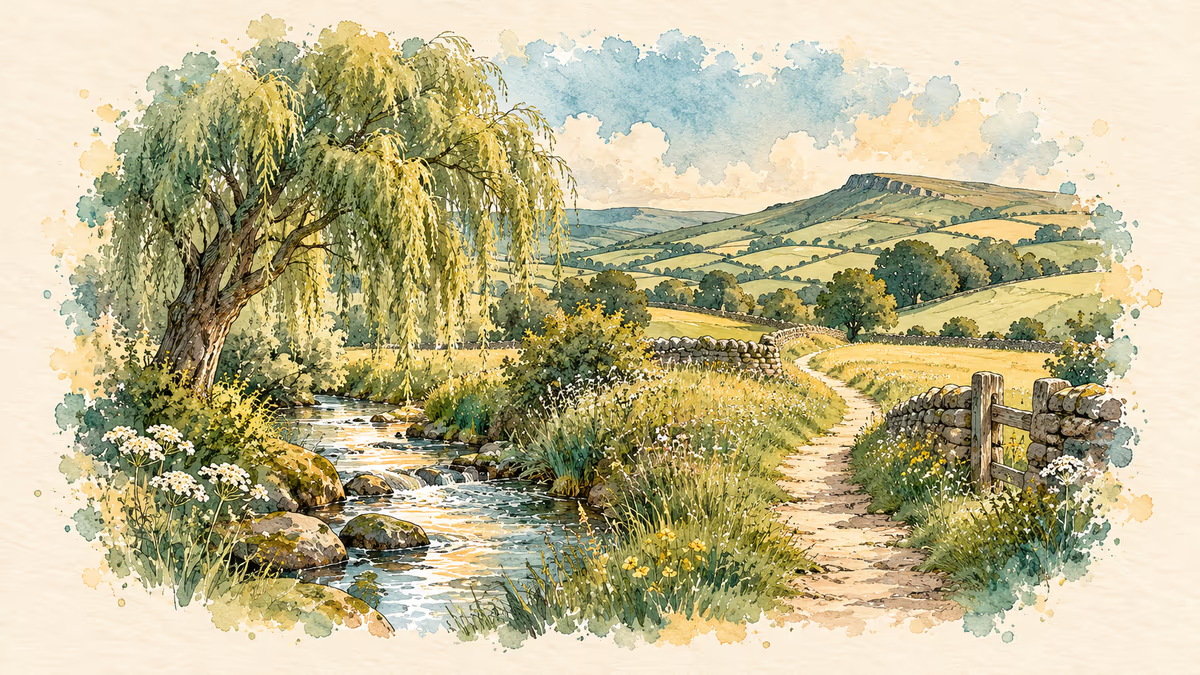
Sutton Bank and the White Horse
The escarpment James Herriot called the finest view in England, with the Kilburn White Horse a mile and a half along the edge
15 min drive from the cafe
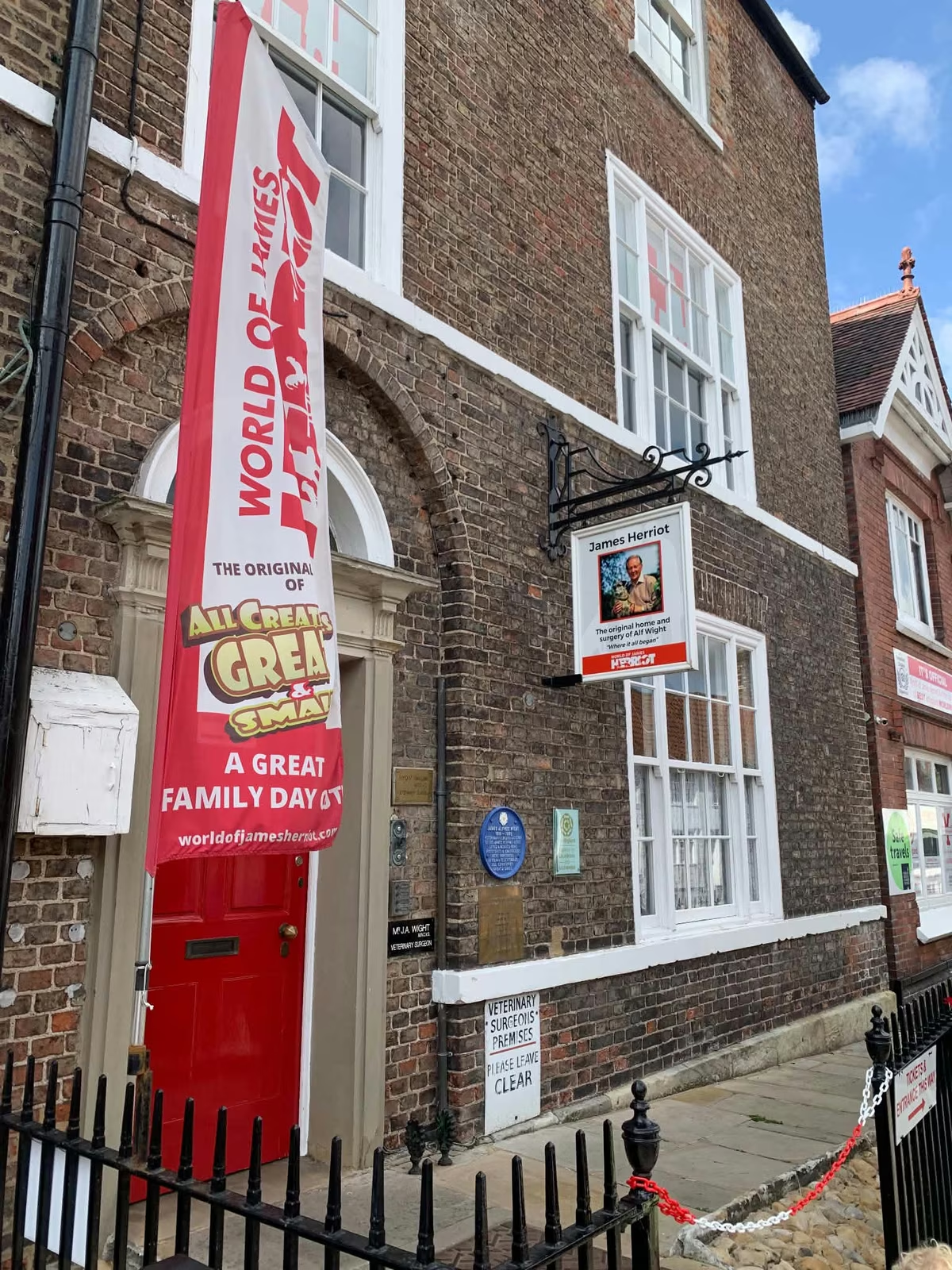
World of James Herriot
The house at 23 Kirkgate where Alf Wight lived and practised, kept as the Skeldale House of the books
4 min walk from the cafe
Start or finish at Tea Time Cafe, 87 Market Place. Hours and directions. Spotted something out of date? Tell us and we'll fix it.