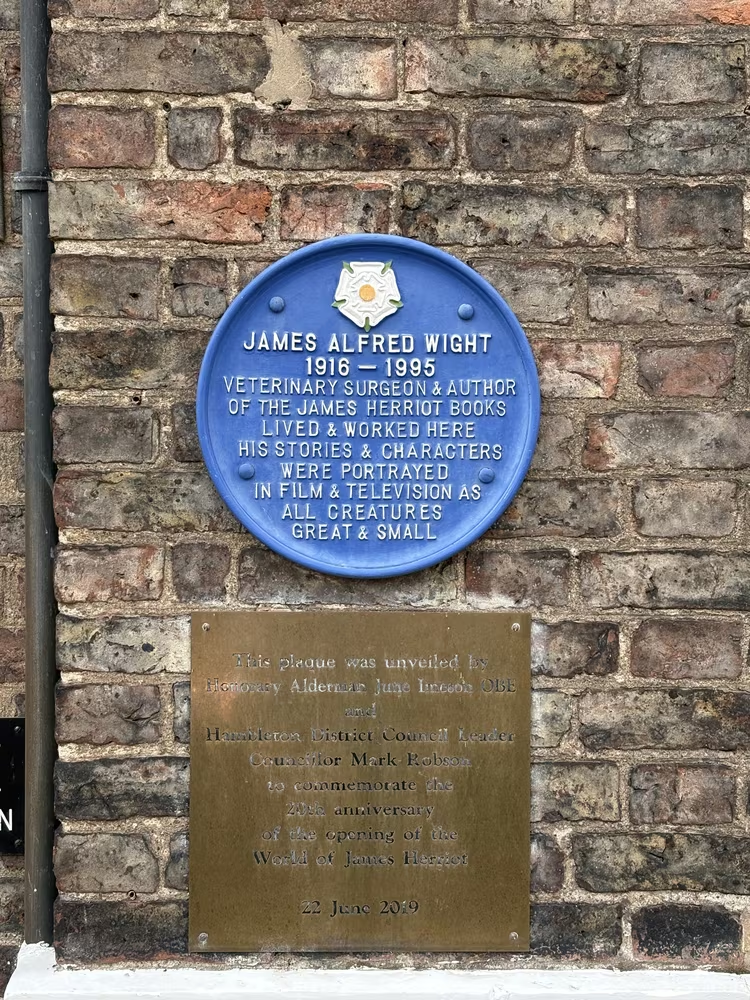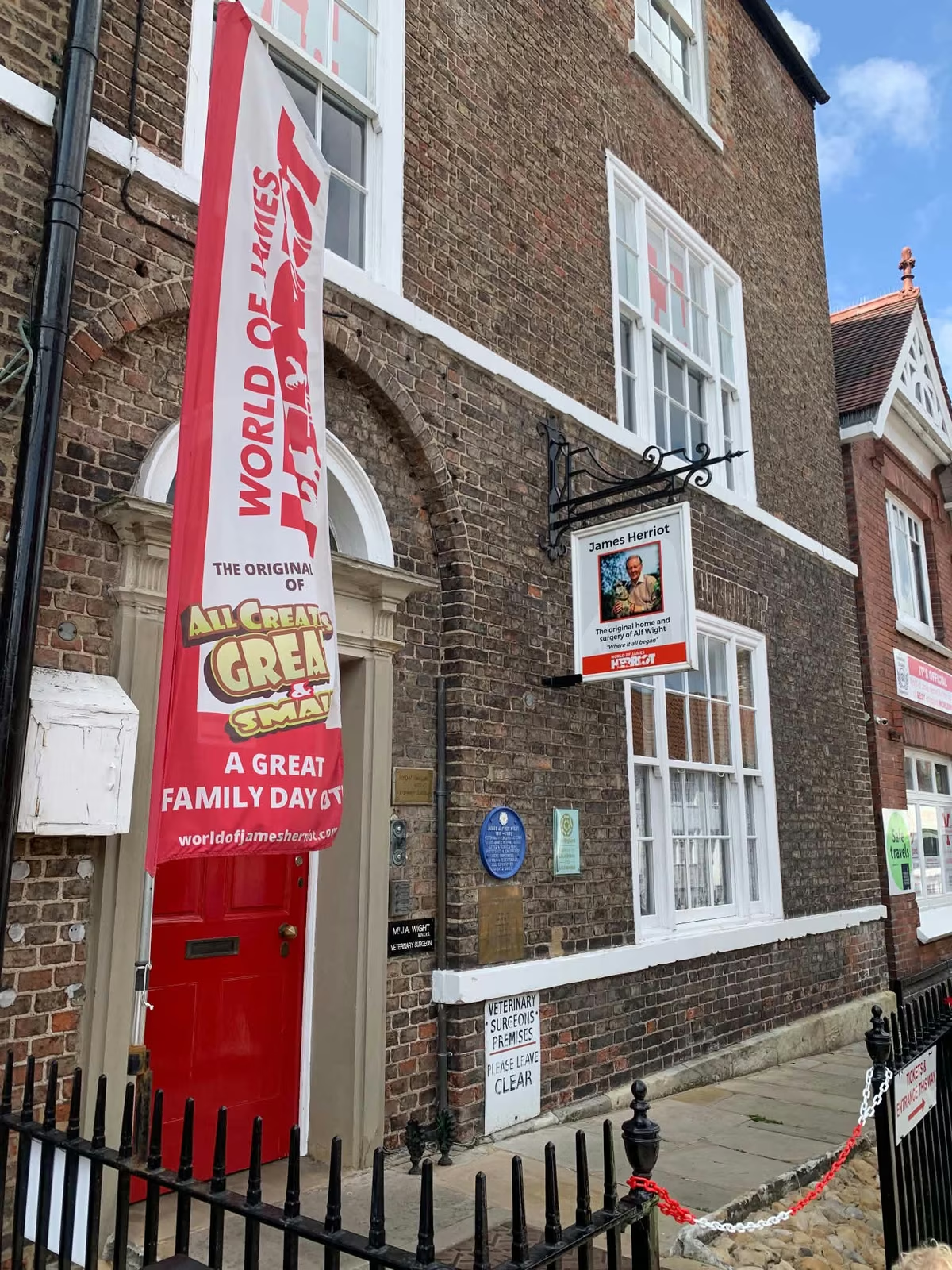
This article was written when the Thirsk and Sowerby walk had twenty blue plaques. A new plaque at James Herriot's former writing home in Sowerby, organised by the World of James Herriot, adds one more to the town's twenty.
The original twenty are free, outdoors, and about two and a half miles in an hour and three quarters including reading; the town circuit on its own is an hour and a quarter. We have put all twenty in walking order with a map, with Rowardennan added as an optional twenty-first stop.
This is not the list. This is the six worth stopping properly for.
The man who founded Lord's, born on Kirkgate
Thomas Lord was born at 14 to 16 Kirkgate on 23 November 1755, four minutes walk from where you are reading this.
He opened his first cricket ground at Dorset Square in 1787. In 1811 he had the turf lifted and moved to Regent's Park. In 1814 he moved it again, to St John's Wood, where it still is and where it still carries his name. The turf at Lord's has been relaid many times since, but the ground exists because a man from a small Yorkshire market town decided to build one.
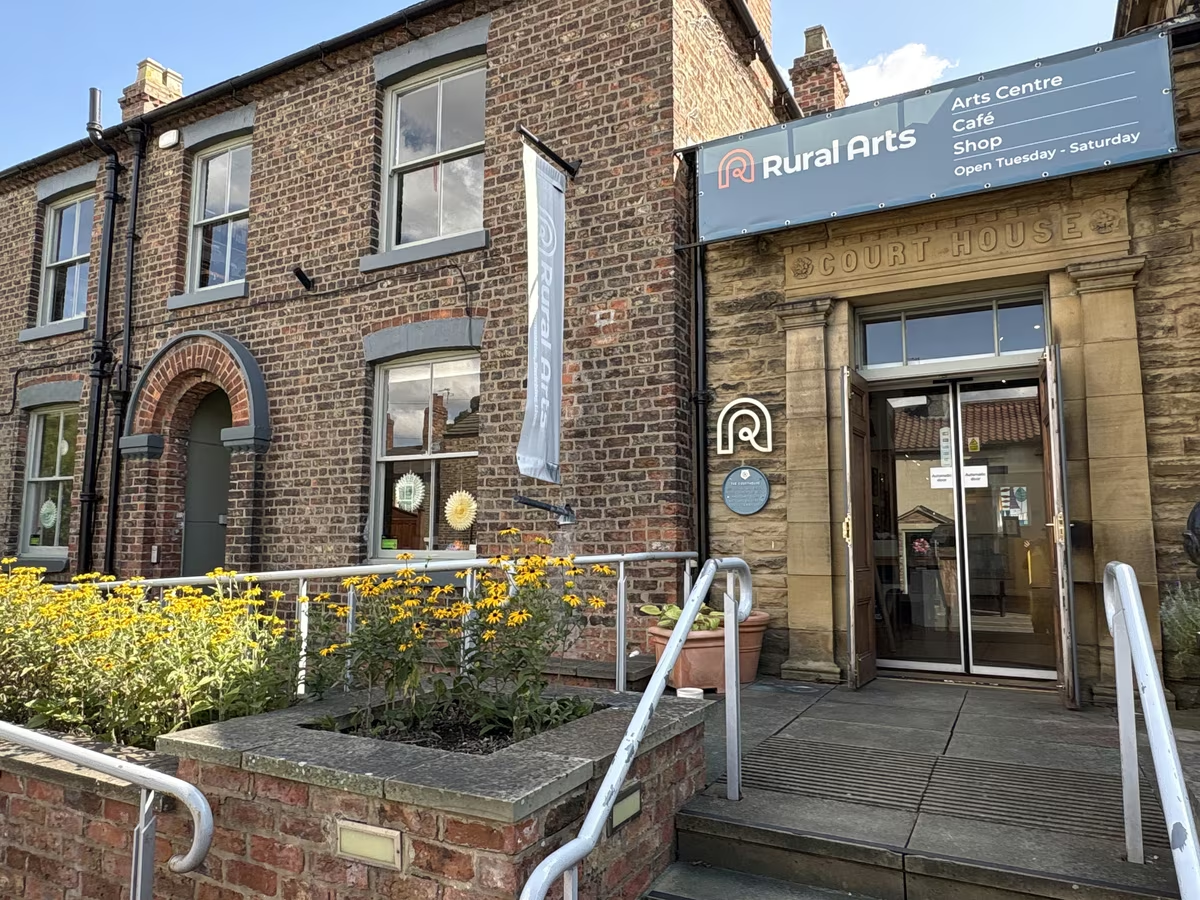
The house is now Thirsk Museum, and it carries two plaques rather than one: a blue and a black, on the same wall. It is the only stop on the trail with a spare.
The nurse who went to Uruguay
Hannah Packer's plaque is on Front Street in Sowerby, opposite St Oswald's, about three quarters of a mile south of our door. It is worth knowing that most published sources put it on the Market Place. They are wrong, and the address they give is a butcher's shop.
She trained as a nurse and in 1882 she left Thirsk for Uruguay. In 1882 that meant weeks at sea to a country most of her neighbours could not have found on a map, with no realistic prospect of coming back quickly if it went wrong. She lived until 1930.
There is no museum to Hannah Packer and no gift shop. There is a plaque on the wall of a brick terrace on a village street, and of the original twenty it is the one worth standing in front of longest.
The weather forecaster who watched the moles
Bill Foggitt forecast the weather by watching what animals and plants did. Moles, frogs, seaweed, the behaviour of birds.
This sounds like a charming local eccentricity until you learn he became a fixture on national television through the 1980s, called by the BBC when the Met Office and the folklore disagreed. He was right often enough to keep being asked. He died in 2004, and the family chemist's shop his plaque sits on was founded in 1836.
There is a pleasing circularity to standing under his plaque while a phone in your pocket shows you a seven-day forecast built from satellite data. Ours is on the day planner, and Foggitt would probably have checked the frogs anyway.
The Wordsworths, passing through
William and Dorothy Wordsworth stopped at the Three Tuns on the market square.
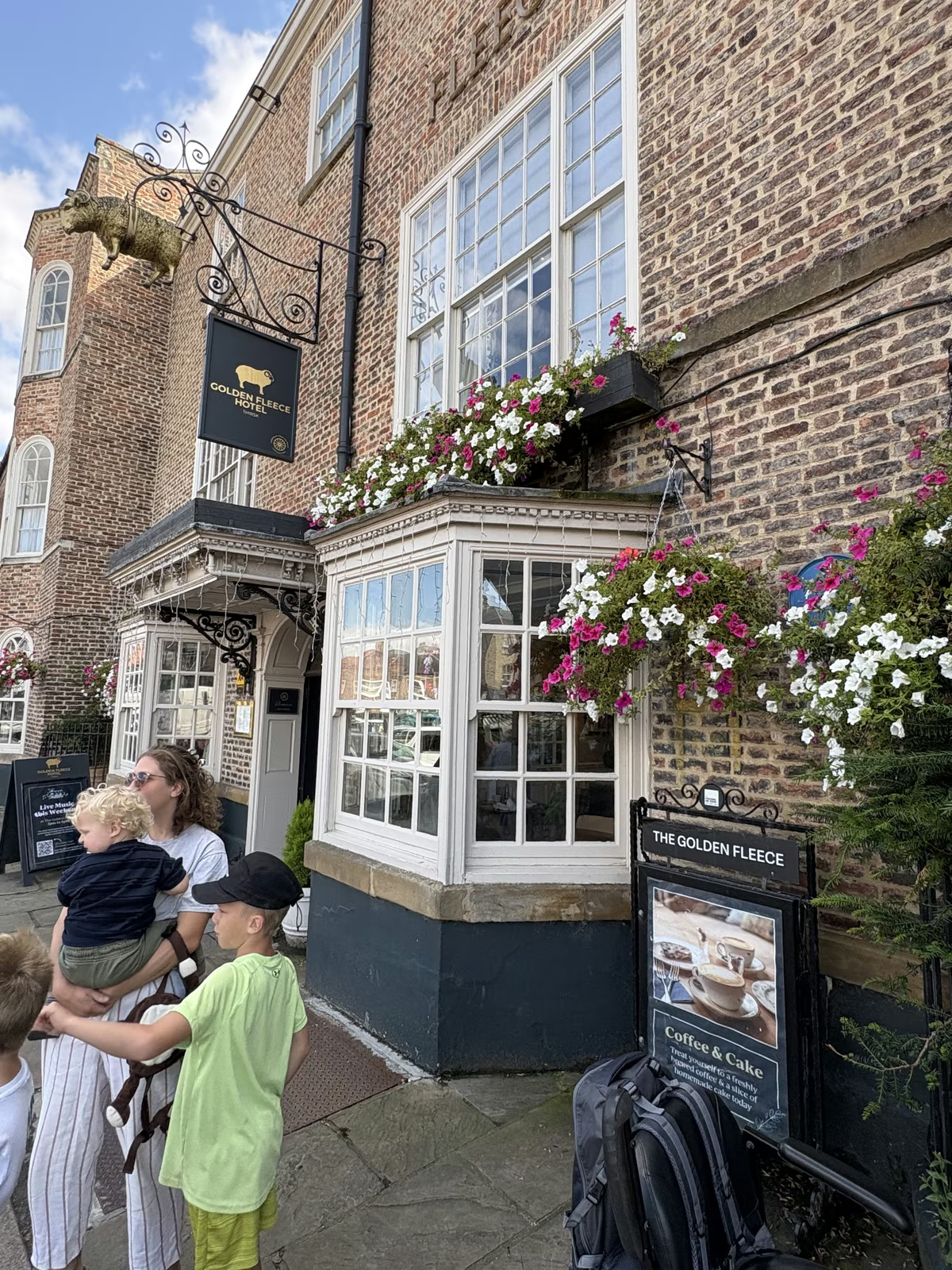
That is the entire story, and it is worth including precisely because it is so ordinary. Thirsk sat on the main road north, and people going somewhere else stopped here, ate here and slept here. The market square is wide because coaches needed room to turn, and the Golden Fleece a few doors along kept stabling for around fifty horses on the Royal Mail route between London and Edinburgh.
The town was a staging post for centuries before it was a destination. Half the buildings on the square are still shaped by that.
The draper's assistant who ran Kew
John Gilbert Baker's plaque is on Bakers Alley, and the story behind it is better than the plaque has room for.
He was born in Guisborough in 1834 and his family moved to Thirsk the same year. He left school at thirteen and spent the next eighteen years working in the family drapery on this spot. He was also, in his own time, teaching himself botany.
He left for Kew in 1866, became Keeper of the Herbarium, and was elected a Fellow of the Royal Society. The drapery burned down in 1864. He was a Fellow of the Thirsk Natural History Society throughout, which is the detail that makes the rest of it land: this was a man who did the work in a market town before anybody in London had heard of him.
The MP who ended tied cottages
Joan Maynard's plaque is at 76 Front Street in Sowerby, forty yards from Hannah Packer's. The two of them together are the reason the walk runs past two miles, and they are worth the half hour it takes to get out and back.
She organised for the National Union of Agricultural Workers and became its vice-president. In 1974 she became the first woman to represent Sheffield in Parliament, as MP for Brightside, and held the seat until 1987. She led on the legislation that ended tied cottages, the arrangement under which a farm worker who lost his job lost his house on the same day.
She lived in Sowerby until she died in 1998. Walk out for her and you get Hannah Packer in the same forty yards. Continue farther to Topcliffe Road if you want to add Herriot's newly marked writing home.
Doing it
The full trail is here, numbered, with Rowardennan added as an optional final stop.
If you have an hour and a quarter, do the town circuit, stops 1 to 18. It never leaves Thirsk, it is flat, and it carries Thomas Lord, Alf Wight, Bill Foggitt and the Wordsworths between them, plus both museums and the cinema. Save Sowerby for a morning when you can walk back over the Flatts.
If you have a wet afternoon, do it anyway. Reading a wall in the rain is a poor plan, but three of the stops are places you can go inside: the museum, the World of James Herriot and the Ritz, which is still a working cinema.
And if it is a market Monday or Saturday, the square stops are harder to stand in front of. Check the market days first. We are at number 87 when you have finished.