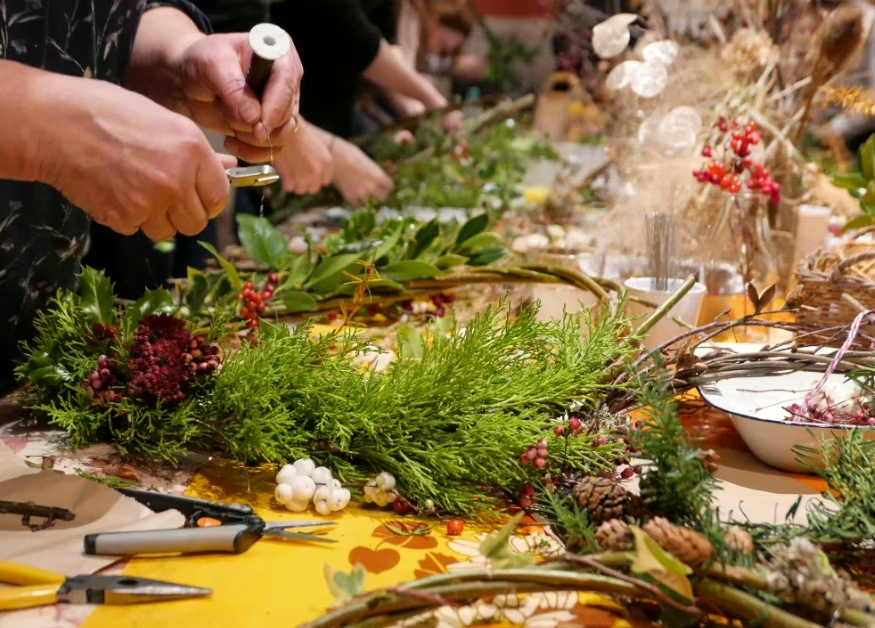
That torn shirt at the back of the drawer might have one more Christmas in it.
Cut cloth into strips, tie them around a wreath frame, then keep going. A bit of red, a bit of green, a print you wouldn't have thought to put beside either of them. The bare ring disappears under a tumble of fabric. Every knot changes it. By the end, you've made a decoration nobody else could make in quite the same way.
This is what local maker Helen Shakespeare does with rag wreaths. She also makes rag rugs, and she cares about giving old clothing another use. On Friday 4 December, she's coming to our upstairs room to show us how. Rosa asked us to share the reason behind the making, because the damage caused by fast fashion matters to Helen. We think a morning spent making something cheerful from old cloth is a good place to start that conversation.
Why old fabric deserves another look
Clothes can be cheap to buy and easy to forget. Making them still takes land, water, energy and chemicals. The European Environment Agency's account of textiles follows those pressures from making the fibres through to disposal. It also explains how fast fashion encourages clothes to be replaced after a short time.
The UK numbers are hard to shrug off. WRAP estimates that we generated 1.45 million tonnes of used textiles in 2022. Its figures for 2021 found that 49% of used textiles went into general waste. That includes textiles beyond clothing, but it is still a lot of material losing the chance of another use.
Of course, a shirt you can still wear deserves to stay a shirt. Mend it, wear it again or pass it on. WRAP's research on clothing life says that replacing clothes less often can cut their carbon, water and waste footprints. Helen's wreath idea comes into its own with cloth that is too worn or damaged for that. A sleeve with a hole can still bring colour to a door.

Look closely at Helen's wreath and you can see the different prints and textures. The little loose edges give it life. Every scrap has had another job before this one.
How a rag wreath goes together
There are only two parts. The frame is a wire wreath ring, the kind florists use; British Wool's how-to guide preferred one with three inner rings. The rest is fabric cut into strips.
Strip size is where the guides part company. British Wool used strips roughly 15cm long and 1.5cm wide, and found the thinner the strip, the easier it was to tie into a strong knot. Frugal Family cut about six inches by an inch, and a Lincolnshire guide went to ten inches long. Helen will show you the size she works to on the day. British Wool cut theirs with pinking shears, which stops the edges fraying.
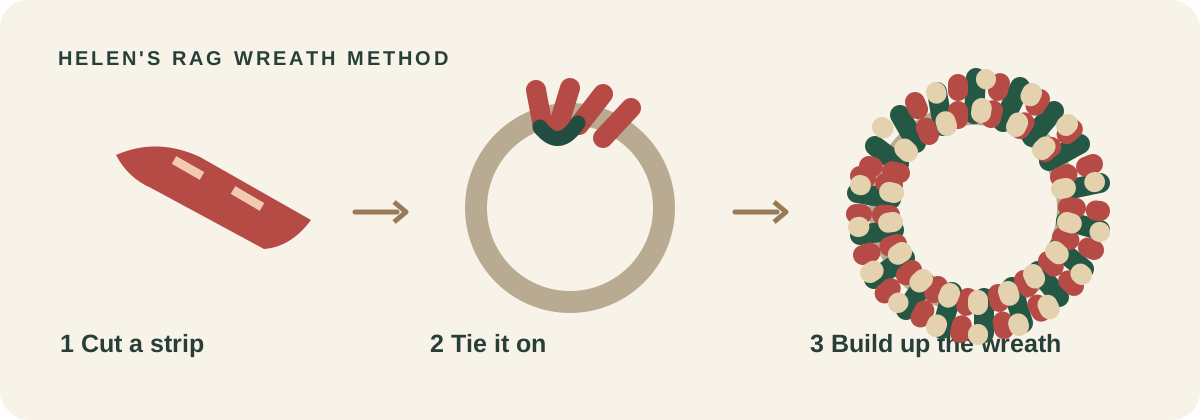
Then you knot each strip around the wire and push it up close to the one before, so the frame never shows through. Keep going until there is no room for another. British Wool's advice on colour is to keep two strips of the same colour from sitting side by side, which is what gives the finished ring its jumbled, every-colour look.
The pleasure of making one
At the workshop, Helen will show how she ties the strips on and builds up the colour until the frame is covered. You don't have to make every strip line up. Try one colour beside another and see what happens. A plain piece can calm a busy patch; a patterned one can wake it up again.
You can spread your strips on the table, have a cuppa and compare colours with the person beside you. Even if two people begin with the same colours, the wreaths will take different turns as the fabric builds up. Helen's finished sample, with its reds, greens, whites and small flashes of pattern, gives you an idea of what is possible without telling you exactly what yours should look like.
A rag wreath isn't a cure for fast fashion. It still has a frame, and we can't put a number on the environmental saving from one workshop. The useful idea is to see what cloth can do before treating it as rubbish. WRAP's guidance on textile reuse puts keeping an item in use for its original purpose first, which is why a shirt you can wear should stay a shirt. The wreath is for the cloth that comes after.
A Friday morning at Tea Time
We're hosting Helen because this kind of making suits a small gathering around the table upstairs. You'll see the wreath grow strip by strip, and you can take yours home for Christmas. We hope you'll leave with a decoration you enjoy hanging up, and a different thought about that worn-out shirt in the drawer.
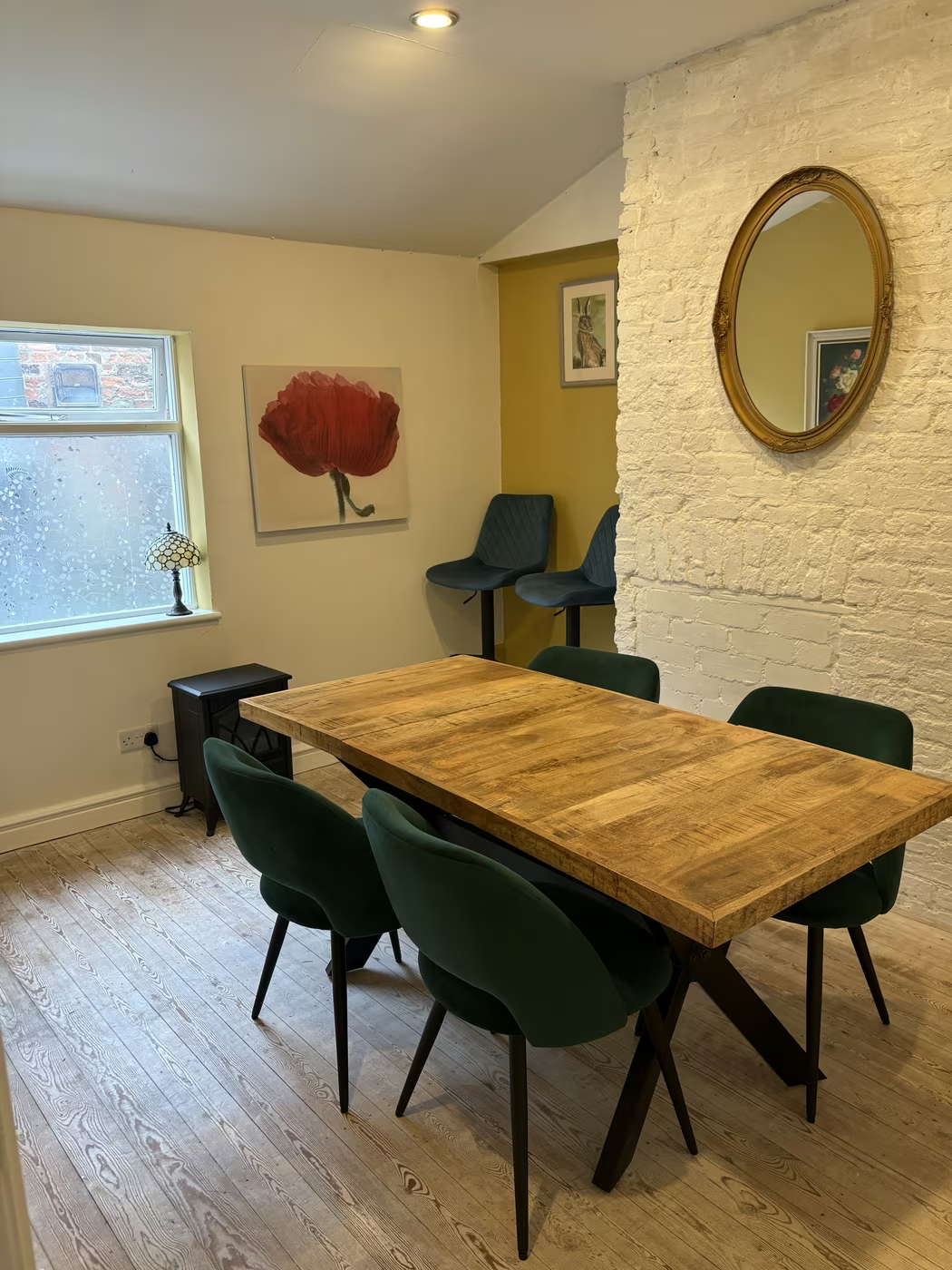
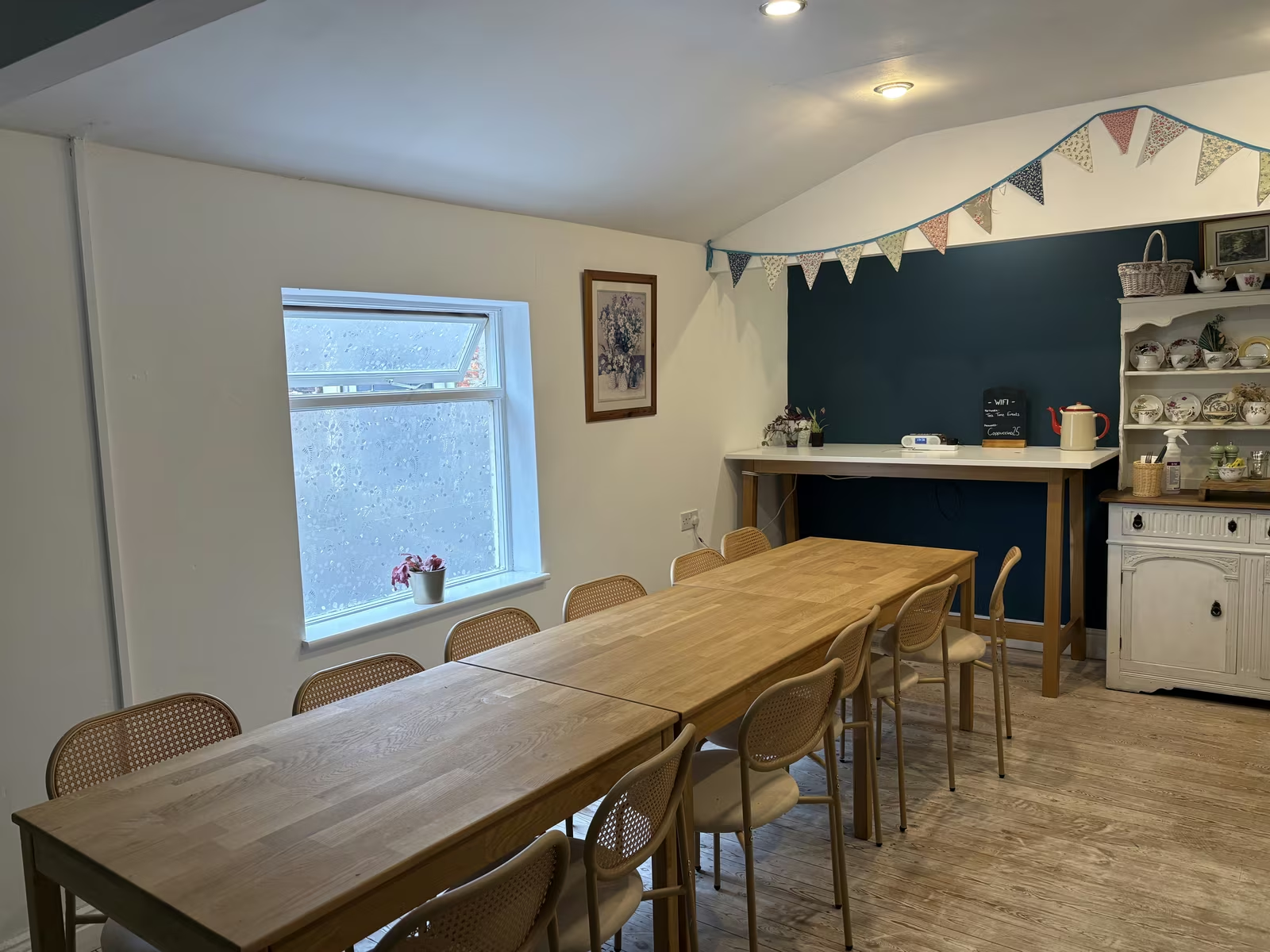
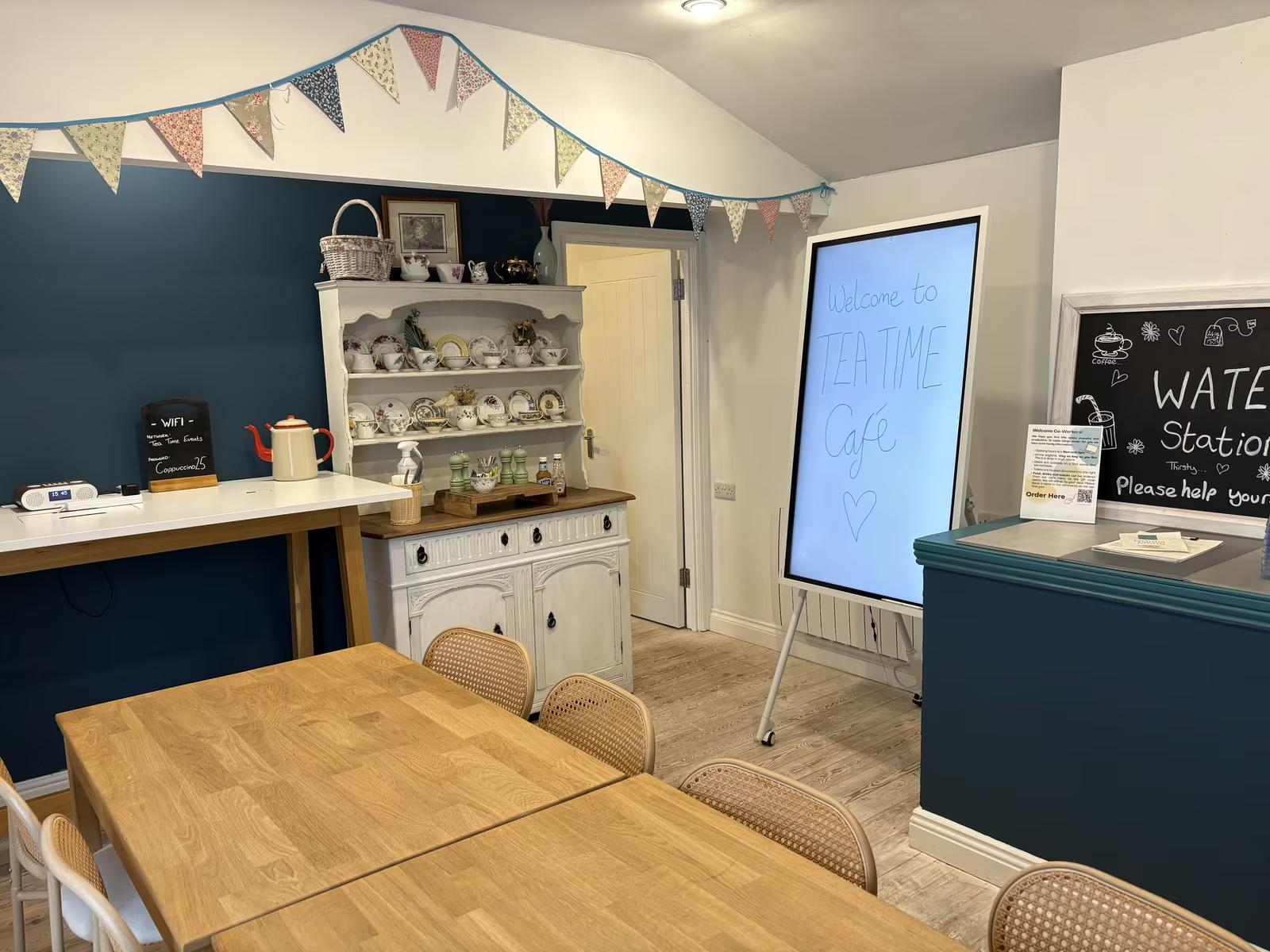
The back room upstairs, where the workshop table will be.
The workshop is on Friday 4 December 2026, from 10am to 12pm, upstairs at 87 Market Place. A place is 20, including the wreath frame, reused fabric, tools and refreshments, so there is nothing to bring. There are 12 places. Book and pay on the workshop page, up to six places at a time, and your confirmation email comes as soon as the payment goes through. Cancel by 10am on Tuesday 1 December for a full refund.
If two or more of you are booking, you can make a morning of it. Tick the afternoon tea box when you book and we'll have a table for you downstairs from 12:15. The stand usually carries four kinds of sandwich, a sweet scone with jam and clotted cream and three of the day's homemade cakes, with as many hot drinks as you like. At the time of writing it is 24.9 a head, paid in the cafe on the day, and the afternoon tea page has the current price. We have written up the rest of a Christmas Friday in Thirsk for anyone staying on into the afternoon.
If Friday morning doesn't suit, ring us on 01845 523869 and tell us what would. For now, the Friday morning is the one in the diary.